Understanding Upper & Lower Receivers
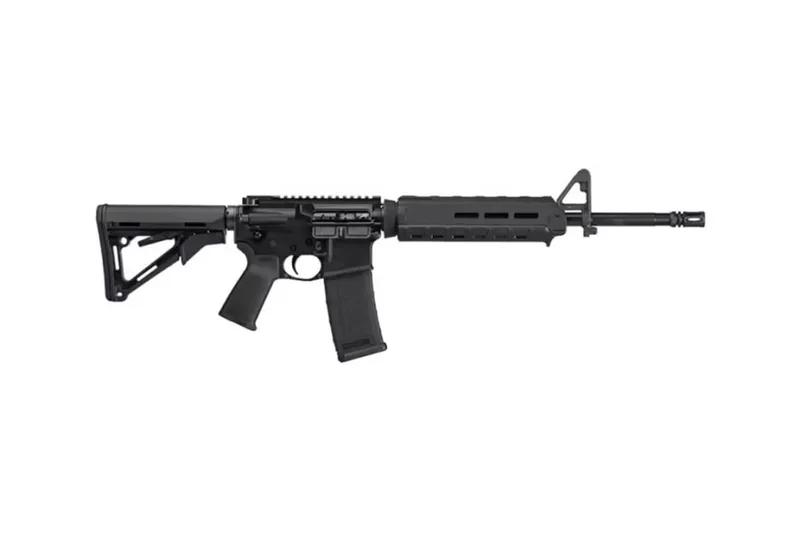
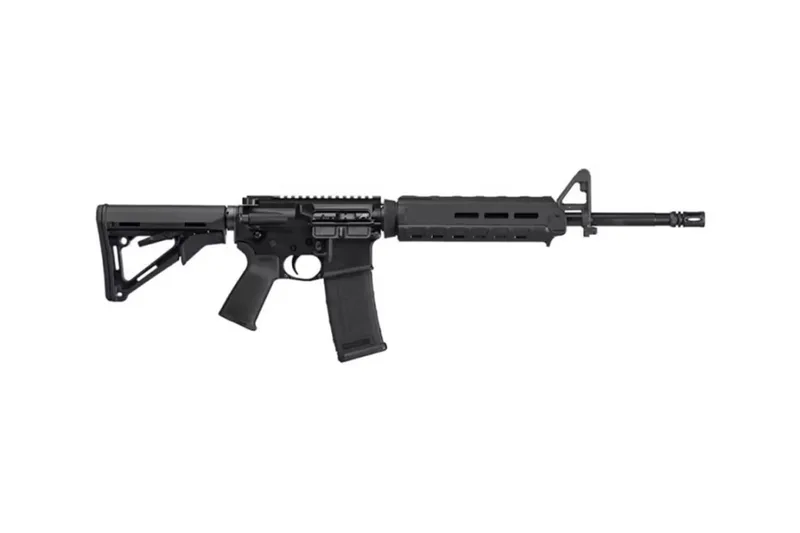
The AR-15 is a modular platform split into two halves: the upper receiver and the lower receiver. The lower is the serialized part — it's legally the firearm — and houses the trigger group, magazine well, buffer tube, grip, and stock. The upper holds the barrel, bolt carrier group, handguard, and charging handle. These two halves connect with two takedown pins, making the AR-15 one of the easiest rifles to assemble and disassemble.
Receivers come in two flavors: stripped and complete. A stripped lower is just the raw forging with no parts installed — you'll build it up yourself. A complete lower comes with the trigger, grip, stock, and buffer assembly already installed. For a first build, starting with a stripped lower is recommended because it teaches you how every part interacts and gives you control over component selection.
Forged vs billet is the next decision. Forged receivers are hammered from aluminum under extreme pressure, creating a dense and strong grain structure. They're the mil-spec standard and the most affordable option. Billet receivers are machined from a solid block of aluminum — they look cleaner with sharper edges and sometimes have enhanced features like integrated trigger guards or flared mag wells, but they cost more and aren't meaningfully stronger. For a first build, forged mil-spec is the way to go.
Stick with trusted names for your first lower: Aero Precision is the gold standard for value — tight tolerances, proper anodizing, and available everywhere. Palmetto State Armory (PSA) is the budget king. Anderson Manufacturing is the cheapest option that still works. Any mil-spec lower will mate with any mil-spec upper, so don't overthink brand matching. For your upper, consider buying a complete barreled upper for your first build — assembling an upper requires more specialized tools (torque wrench, vise block, barrel nut wrench) and tighter tolerances than a lower.
Barrel Selection
The barrel is the single most important component for accuracy. For a first build, 16 inches is the sweet spot. It's the legal minimum length for a rifle without NFA paperwork (no tax stamp, no wait time, no SBR registration). It also provides excellent velocity with 5.56 NATO — you'll get around 3,100 fps with M193 55-grain ammo, which is more than enough for effective terminal performance out to 500 yards.
Barrel finish matters for longevity. Chrome-lined barrels have a layer of hard chrome inside the bore and chamber, making them extremely durable and corrosion-resistant — they'll last 20,000+ rounds and handle sustained fire well. Nitride (also called Melonite or QPQ) barrels are treated with a salt bath process that hardens the steel throughout, not just the surface. Nitride is slightly more accurate out of the box and costs less, but chrome-lined edges it out for sheer barrel life. For a first build, nitride is the better value.
Twist rate determines which bullet weights your barrel stabilizes. A 1:7 twist (one full rotation every 7 inches) is the modern standard and the most versatile choice. It'll stabilize everything from 55-grain plinking ammo to 77-grain match loads like the Mk262. If you only plan to shoot 55-grain, a 1:8 twist works great too, but 1:7 gives you the most flexibility.
For gas system length on a 16-inch barrel, mid-length is the clear winner. It places the gas port further from the chamber than carbine-length, which means lower port pressure, softer recoil impulse, less wear on your bolt and extractor, and a smoother shooting experience overall. Carbine-length on a 16-inch barrel works but runs harsher than necessary. Reliable barrel brands at good prices: Ballistic Advantage (owned by Aero Precision, excellent QC), Faxon (lightweight options, great accuracy), and Criterion (step up in precision, worth it if budget allows).
Bolt Carrier Group
The bolt carrier group (BCG) is the engine of the AR-15. It strips a round from the magazine, chambers it, locks into the barrel extension, fires, extracts the spent case, and ejects it — all in a fraction of a second. A quality BCG is non-negotiable for reliability.
Get a full-auto rated BCG, even though your rifle is semi-auto. The full-auto carrier is heavier than a semi-auto carrier, which provides more mass to drive the action reliably. It has a shrouded firing pin channel and a different cut on the bottom rear. Virtually all quality BCGs sold today are full-auto rated — it's the standard.
For coatings: phosphate (parkerized) is the mil-spec standard — it's dark grey/black, holds lubricant well, and is the most affordable option. It works perfectly fine. Nickel boron (NiB) is a step up — the slick silver coating reduces friction and makes cleaning dramatically easier. Carbon and fouling wipe right off. It's worth the $20-30 premium if budget allows. Nitride BCGs offer similar ease of cleaning to NiB at a lower price point. DLC (diamond-like carbon) is the premium option — extremely hard, slick, and durable, but costs more.
The most important inspection point on any BCG is the gas key — the small rectangular piece on top of the carrier that interfaces with the gas tube. The gas key must be properly staked, meaning the carrier screws are peened over so they can't back out under firing. If those screws loosen, your rifle stops cycling. Look for visible staking marks (dimples in the carrier metal overlapping the screw heads). Toolcraft is the undisputed value king for BCGs — they're an OEM manufacturer that supplies carriers for many premium brands. A Toolcraft NiB BCG for $80-100 is one of the best values in the AR-15 world.

Handguard & Gas System
The handguard serves two purposes: it protects your hand from the hot barrel, and it provides mounting surface for accessories like lights, lasers, vertical grips, and bipods. Modern handguards use the M-LOK attachment system — a series of slots cut into the handguard that accept accessories with a twist-lock mechanism. M-LOK won the industry standards war over KeyMod and is now the dominant system. Picatinny rail sections can be added to M-LOK slots wherever you need them.
Free-float handguards are strongly recommended over two-piece drop-in handguards. A free-float rail attaches only to the barrel nut and does not touch the barrel at any other point. This means nothing you mount on the handguard — your grip pressure, a bipod, a sling — will affect the barrel's harmonics or point of impact. It's a meaningful accuracy improvement, especially for precision shooting. Drop-in handguards clamp around the barrel via a delta ring and front sight base, which can shift point of impact under pressure.
Match your handguard length to your gas system length and intended use. For a 16-inch mid-length barrel, a 13-15 inch handguard is typical. This gives you enough rail space for accessories and covers the gas block (which looks cleaner and protects it from damage). Make sure the inside diameter of the handguard clears your gas block — most low-profile gas blocks are .750 inches in diameter.
Recommended handguards for a first build: Aero Precision Atlas S-ONE or R-ONE (great value, lightweight, proprietary barrel nut is easy to install), BCM MCMR (bombproof, excellent lockup, trusted by professionals), and Midwest Industries Combat Rail (solid mid-tier option with good hardware). For the gas block, get a .750 low-profile steel gas block from Aero or Wojtek Weaponry — the adjustable Wojtek is a great option for tuning your gas system.
Assembly Order & Final Tips
Build the lower receiver first — it's simpler, requires fewer specialized tools, and gives you confidence before tackling the upper. The lower assembly order: install the magazine catch and bolt catch first (small springs, take your time), then the trigger group (follow the manufacturer's instructions exactly — pin orientation matters), then the safety selector, pistol grip, buffer retainer, buffer tube, buffer spring, buffer, and stock.
You'll need a few specific tools: a set of roll pin punches (or a roll pin starter set), an armorer's wrench for the castle nut on the buffer tube, a torque wrench if you're assembling the upper, and a vise with a receiver block or clamshell. Blue Loctite (242) goes on the castle nut and pistol grip screw. Stake the castle nut after torquing to 40 ft-lbs — this prevents it from backing off under recoil.
If you're assembling the upper yourself, barrel nut torque is critical. Torque specs vary by handguard manufacturer (typically 30-80 ft-lbs) — follow the included instructions exactly. Use aeroshell grease or anti-seize on the barrel nut threads. The barrel installs into the upper receiver and is held by the barrel nut — proper alignment of the gas tube through the upper receiver is essential. The gas tube must pass freely through the gas key on the BCG without binding.
Before your first range trip: function check everything. With the rifle unloaded, cycle the charging handle to verify smooth BCG travel. Check trigger reset — pull trigger, hold it back, cycle the charging handle, slowly release the trigger until you feel and hear the reset click. Verify the safety engages and disengages cleanly. Hand-cycle five rounds through the action to verify feeding. Then take it to the range, start at 25 yards, and zero your optic.