How Barrel Length Affects Velocity
The relationship between barrel length and muzzle velocity is straightforward: a longer barrel gives the expanding propellant gases more time to push the bullet, resulting in higher velocity. For 5.56 NATO, the round was originally designed for a 20-inch barrel (the M16A2), where it achieves its full velocity potential. As you shorten the barrel, velocity drops because the bullet exits the muzzle before all the powder has burned, and you lose the additional acceleration that those extra inches of barrel would provide.
The general rule for 5.56 NATO is a loss of approximately 25-30 feet per second for every inch of barrel you remove below 20 inches. With M193 55-grain ball ammunition: a 20-inch barrel produces approximately 3,240 fps, a 16-inch barrel produces approximately 3,100 fps, a 14.5-inch barrel produces approximately 3,000 fps, an 11.5-inch barrel produces approximately 2,900 fps, and a 10.3-inch barrel (Mk18 length) produces approximately 2,800 fps.
This velocity loss has real implications for terminal performance. The 5.56 NATO relies on velocity to be effective — the bullet is designed to yaw and fragment upon impact, but it only does this reliably above approximately 2,700 fps. From a 20-inch barrel, M193 maintains fragmentation velocity past 200 yards. From a 10.3-inch barrel, that effective fragmentation range shrinks to roughly 50-75 yards. This doesn't mean the round becomes useless at longer ranges — it still causes damage — but it transitions from devastating fragmentation to a slower, less effective wound channel.
Beyond velocity, shorter barrels produce more muzzle blast, flash, and concussion. The unburned powder that exits with the bullet ignites in the atmosphere, creating the fireball you see on short-barreled guns. This is louder, harder on the shooter's ears (even with hearing protection), and creates more visual signature. A flash hider helps, and a suppressor helps enormously — one of the biggest advantages of running a suppressor on a short barrel is taming that blast.
Common Lengths & Use Cases
The 10.3-inch barrel is the close quarters battle (CQB) standard, made famous by the Mk18 CQBR. It's maximally maneuverable — easy to use in vehicles, through doorways, and in tight spaces. The trade-offs are significant: more blast, more flash, reduced velocity, and a harsher recoil impulse from the short gas system. It excels inside buildings and within 100 yards. Beyond that, you're giving up a lot of performance compared to longer options. The 10.3 runs a pistol-length gas system.
The 11.5-inch barrel is gaining popularity as the modern fighting carbine length. It offers a meaningful improvement in velocity and dwell time (the time the bullet spends in the barrel after passing the gas port) over 10.3 inches, while staying compact enough for vehicle and CQB work. The extra 1.2 inches moves you from pistol-length to carbine-length gas, which reduces bolt velocity and battering. Many consider 11.5 the best balance of performance and handling for a fighting gun.
The 14.5-inch barrel is the M4 carbine profile. With a pinned and welded muzzle device (a permanently attached flash hider, brake, or suppressor mount that brings total length to 16 inches), it's legal as a rifle without NFA paperwork. This is a popular option for people who want something shorter than 16 inches without dealing with SBR registration. It runs well with carbine or mid-length gas.
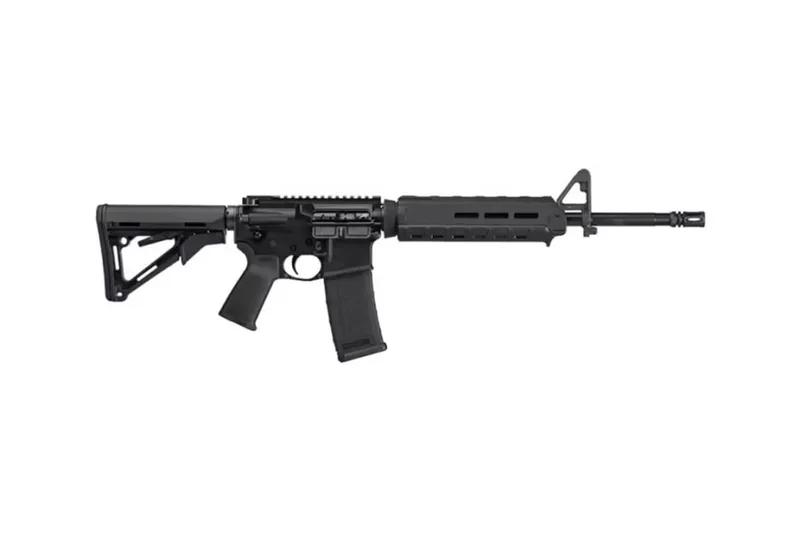
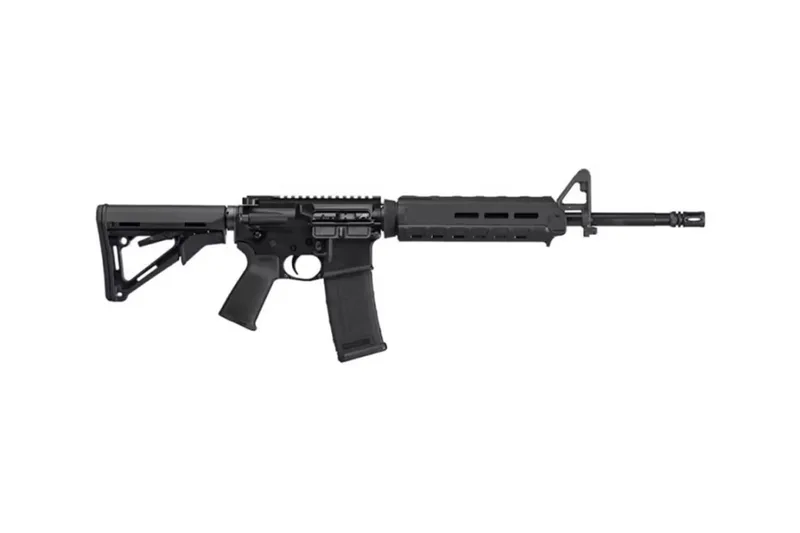
The 16-inch barrel is the civilian standard and the best all-around length. No NFA considerations, excellent velocity, and compatible with the softer-shooting mid-length gas system. If you're only going to have one AR-15, make it a 16-inch. The 18-inch barrel enters SPR (Special Purpose Rifle) and DMR (Designated Marksman Rifle) territory. The extra 2 inches over 16 provide a modest velocity bump and a slightly longer sight radius with iron sights. It pairs well with rifle-length gas for the smoothest recoil and longest parts life. The 20-inch barrel extracts maximum velocity from 5.56 NATO and is the classic full-length rifle. It's the best choice for precision work, but it's long and can be unwieldy in anything other than open terrain.
SBR Legal Considerations
Under the National Firearms Act (NFA), a rifle with a barrel length under 16 inches and an overall length under 26 inches equipped with a buttstock is classified as a Short-Barreled Rifle (SBR). Manufacturing or possessing an unregistered SBR is a federal felony with severe penalties. To legally build an SBR, you must file ATF Form 1 (Application to Make and Register a Firearm), pay a $200 tax, receive approval, and then engrave the weapon with your name, city, and state.
The pin-and-weld method is a legal way to have a barrel shorter than 16 inches without SBR registration. If a muzzle device is permanently attached (pinned through the barrel and welded in place, then the weld dressed so it cannot be easily removed), the overall barrel length is measured from the breech face to the end of the permanently attached device. A 14.5-inch barrel with a 1.5-inch or longer muzzle device, pinned and welded, measures at 16 inches and is not an SBR. This is how most people run 14.5 builds legally. Common pin-and-weld devices: SureFire WarComp (1.8"), SureFire SOCOM brake, and Dead Air Keymo flash hider.
The "pistol brace" landscape has changed significantly and continues to evolve through legal challenges. As of now, it is critical to research the current federal and state laws before building any short-barreled platform. What was legal last year may not be legal today, and vice versa. The ATF's rules on braced pistols have been subject to court injunctions and changes. Do not rely on internet forums or outdated guides — consult the current ATF regulations and ideally a firearms attorney if you're unsure.
Barrel length is always measured from the closed bolt face (breech face) to the end of the barrel's muzzle crown, NOT including any muzzle device unless it is permanently attached. A barrel advertised as "16 inches" should measure at least 16.00 inches by this method. Some manufacturers intentionally make barrels 16.1 or 16.2 inches to provide a margin of safety. This is general information only — laws vary by state and change frequently. Always verify current federal and state regulations before building.
Gas System Matching
The gas system length determines where the gas port is drilled in the barrel. When the bullet passes the gas port, propellant gas enters the gas tube, travels back to the bolt carrier group, and pushes the carrier rearward to cycle the action. The distance from the gas port to the chamber affects how much pressure is in the system when the gas reaches the BCG — this is called port pressure, and it's the key factor in how the gun feels, how hard it is on parts, and how reliably it cycles.
Pistol-length gas has the shortest gas system at approximately 4 inches from the receiver. It's used on barrels from 7 to 10.5 inches. The gas port is close to the chamber, so port pressure is very high when the gas arrives. This means aggressive bolt velocity, sharp recoil, and more stress on the extractor, bolt, and buffer system. Pistol-length gas guns benefit from heavier buffers (H2 or H3) and enhanced extractor springs to manage the violence of the cycling. They work, but they're harder on parts.
Carbine-length gas is approximately 7 inches from the receiver and is the traditional choice for 10 to 16-inch barrels. It was the standard for the M4 carbine's 14.5-inch barrel and works well in that configuration. On a 16-inch barrel, carbine gas still works but is overgassed compared to mid-length — you'll feel a snappier recoil and the bolt hits the buffer harder. It's not a problem, just not optimal.
Mid-length gas is approximately 9 inches from the receiver and is the modern standard for 14.5 to 18-inch barrels. On a 16-inch barrel, mid-length gas is the best option: lower port pressure means softer recoil, less bolt velocity, longer extractor and bolt life, and a smoother shooting experience. The difference between carbine and mid-length gas on a 16-inch barrel is immediately noticeable — mid-length is meaningfully softer.
Rifle-length gas is approximately 12 inches from the receiver and is designed for 18 to 20+ inch barrels. It provides the lowest port pressure and the smoothest cycling of any gas length. If you're building an 18 or 20-inch precision or SPR-style rifle, rifle-length gas is the obvious choice. It produces the softest recoil and the longest parts life of any configuration.